
Do you ever plan your trips around berry season? That can mean fresh goodness in your pancakes and camp granola!
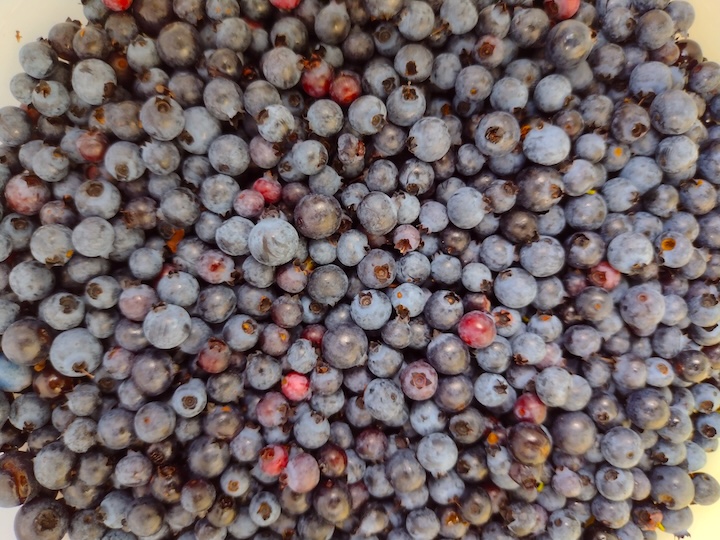
We’re usually at Okontoe several times during the camping season so we don’t necessarily plan trips around the berries—but I certainly take advantage of the ones that are ripe when I’m there 🙂
It’s super fun to be out on a hike or on a canoe portage and spot ripe berries along the trail. Some areas are known for various berries (i.e., any hike called “Blueberry Hill” for example) and sometimes you find them by chance.
Be sure to leave some for the bears though! They depend on berries as part of their fall feasting to prep themselves for the winter hibernation.
Here’s a look at 5 delicious berries you can find in the Gunflint Trail region (some even right in Okontoe):
1. Strawberries
In the northland, wild strawberries are tiny little bright-red berries on little-bitty plants.

Like all strawberries, they love sun. If we find them, it’s usually alongside a back road or trail edge where it isn’t crowded out by bigger plants.
Look for the jagged-edged leaves in sets of three. If the berries are ripe, you won’t miss the bright, bright red.
They ripen in mid-late June or early July and are sweetly delicious.
2. Juneberries
This is the one most people don’t know about. I didn’t until my sister and her family brought their Minnesota Wild Berries book one year and we all discovered them together.
(I love them so much I bought a Juneberry bush for our yard!)

Also known as serviceberries and Saskatoon berries, Juneberries look much like blueberries but they grow on trees rather than little bushes.
(In the north where Okontoe is, the trees are more like large bushes. Further south they’re literal trees that can grow 20-30 feet high.)
Juneberries flower before their leaves even pop out, very early in the spring, which is fun. Even though they’re called Juneberries, their best season up at Okontoe is July and sometimes into August.
These have the same “crown” as blueberries at the bottom of each one, which makes them easy to identify. When the berries are ripe they’ll be a deep purple. They taste wonderful and are common in sunny areas throughout our area.
3. Blueberries
Probably the most famous of our local wild berries are the blueberries. There’s even an annual Biggest Blueberry contest each summer on the Gunflint Trail.
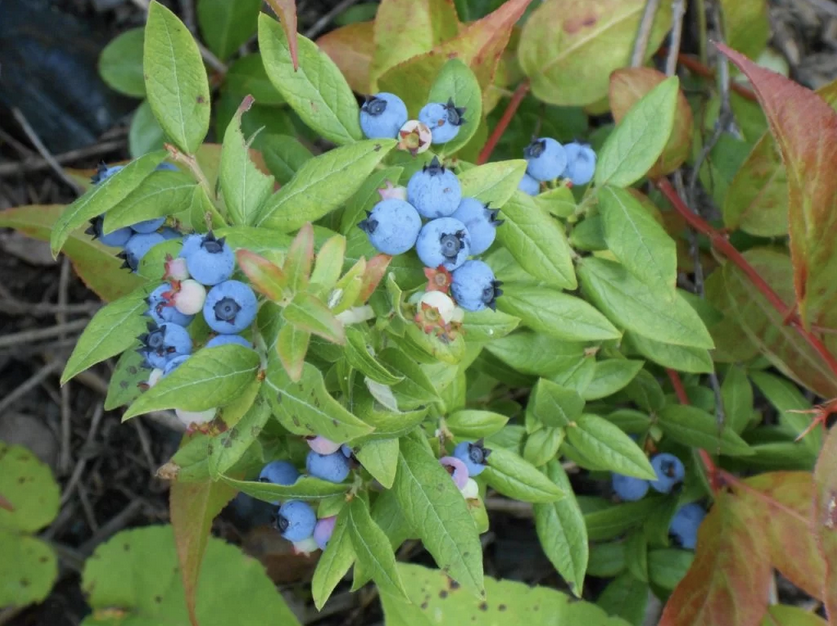
Again, because we’re up in the north, our blueberry plants are quite small. As you can see from the photo above, in a good year you’ll see loads of them on each little plant.
Blueberries are also sun lovers, although they seem to do fine in dappled sun, too. Like Juneberries, it’s not uncommon to see them growing on the edges of the bigger trees, along roadsides and trails where that all-important sunlight can reach them.
Look for the ripe berries from mid-July to mid-August. As their name suggests, they’re ripe when they’re blue.
4. Raspberries
Raspberry bushes are also quite common in sunny spots around here. The bushes grow to about waist-high and the bright red and very tasty berries usually ripen in mid-July through much of August.

The berries tend to grow under the leaves, so be sure to lift up the branches and peak underneath so you don’t miss any.
Most people have heard of and make blueberry pancakes, of course. Raspberries are also a wonderful addition to your pancake batter!
5. Thimbleberries
This is the other one many people may not know about. Thimbleberries—unlike the others on this list—thrive in shady woodlands rather than sunny areas.

You can easily identify the plants by their gigantic maple-like leaves that are almost fuzzy feeling. They grow waist-high and make it easy on us by producing the berries at the top of the plant, above the leaves.
They start as beautiful, large white blossoms and gradually ripen into these delicious bright-red berries mid-July into August.
There berries like very much like raspberries with smaller, more dense little sections.
Honorable Mentions
The five berries we listed above are all delicious no matter how you eat them. Fresh off the bush…in pancakes, granola or yogurt, in jams and pies. Yum!
These, on the other hand, while edible, aren’t that. If you get lost in the woods and need something to eat, they’ll do. Otherwise they’re very pretty to look at!
Pin Cherries
These bright red berries grow in clumps from the small trees at the end of the summer. They’re sun lovers.
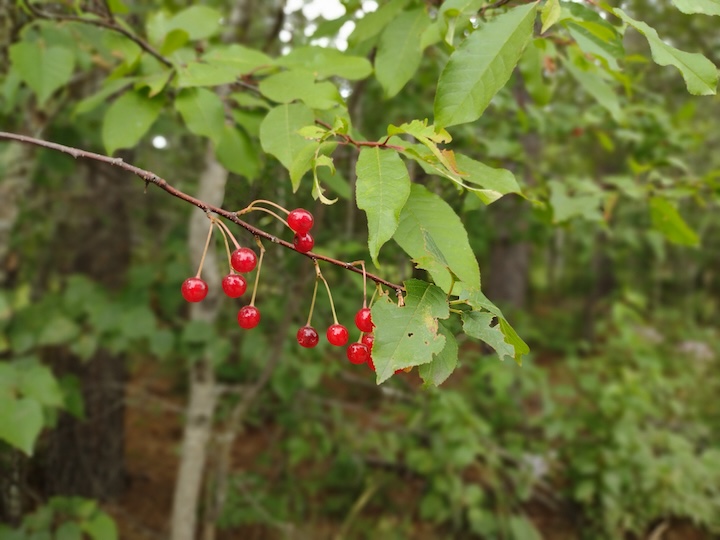
Like all cherries, they have a tiny pit inside. If you want to make the effort, you can gather a bunch and de-pit them, then make them into jam.
They’re apparently very tart (I haven’t tried them yet) so you’ll need a decent amount of sugar or honey.
They make these small trees really beautiful at the end of the season, August and September. And the birds just love them, which is also fun to watch.
Rose Hips
Rose hips aren’t berries, but I’m including them because they’re edible and are almost as colorful as berries.
Wild roses are prolific in our area. Their delicate blooms can be almost white to dark pink in mid-late June. Later in the summer the blooms turn to rose hips, which are also very pretty.
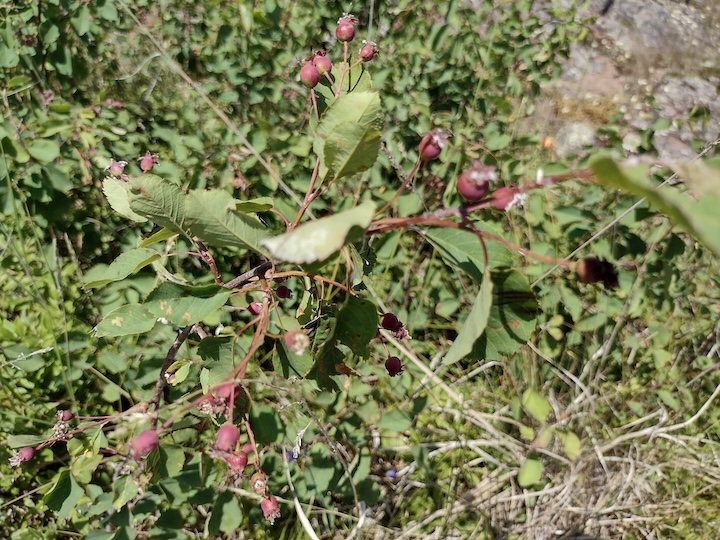
Rose hips don’t taste fantastic alone, but can be used various ways. One year, a couple of the Okontoe staff made rose hip jam when I was there, so I got to sample it. Delicious!
You can also use them in salads. Like all edible plants, they’re super nutricious—packed full of vitamin C.
Wild roses are also sun lovers.
Bunchberries
You would only eat bunchberries if you needed to survive in the woods. While they’re edible, they’re no tasty. But they’re so cheerful and bright, I just have to include them here.
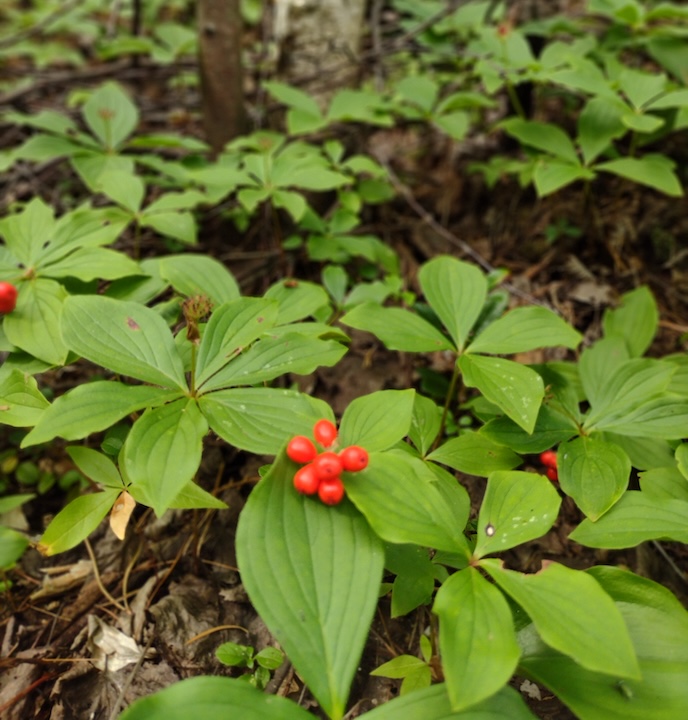
Bunchberries are one of my favorite early spring flowers. Unfortunately, they bloom during June which is the worst of bug season, so I don’t see them real often, lol.
The clusters of bright red berries appear late July and August. These tiny plants often carpet the shaded forest floor.
Mountain Ash (Rowan) Berries
Rowan berries are the berries that grow in large clumps on mountain ash trees.
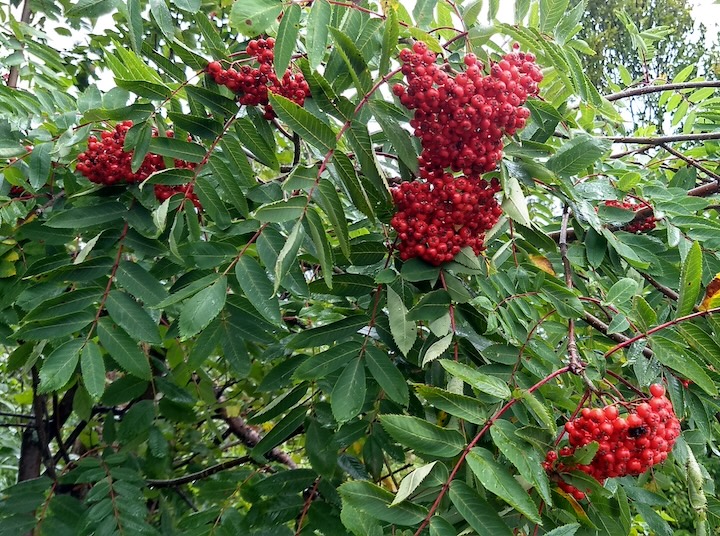
Online sources say they can be cooked and used in jams, syrups and other items. Raw, they’re bitter and contain a chemical that can give you stomach issues.
This is another one the birds love, though, and one very cool thing is the berries stay on the trees all winter long. It’s fun to see those splashes of red throughout camp and even when driving up Highway 61 and along parts of the Gunflint Trail.
Don’t Eat These Berries
Here are a couple to stay away from (and keep your kids away from):
Bluebead Lily Berries
Bluebead lily berries are dark blue and, for the unitiated, possibly confused with blueberries. They really don’t look anything like blueberries, however.

Bluebead leaves are low to the ground and look like wide lily leaves. The berries sit on top of the flower stalk. There’s no “crown” on the berries, they’re smooth all the way around.
While not toxic per se, they taste nasty and eating too many can cause stomach issues.
Baneberry (White and Red)
Baneberries are toxic and to be avoided altogether. They’re beautiful—both the flowers and the berries. They grow 2-3 feet tall in wooded areas and really brighten up the forest.
But enjoy looking and just hike right on by.
I don’t have a photo of these, so check out these links:
Apparently, all white berries in Minnesota are toxic, so that’s good to know. Baneberries grow in clumps at the top of the flower stalk above the leaves, which makes them quite easy to identify.
The berries are smooth and shiny and ripen mid-to-late summer.
Wrapping It Up
It’s fun to know what’s growing around you when you’re at Okontoe or enjoying the many hiking trails and canoe routes in the Gunflint area.
Book Your Stay at Okontoe Today
Whether you go berry picking intentionally or simply enjoy them here and there while you’re out, we hope you learned something today!